


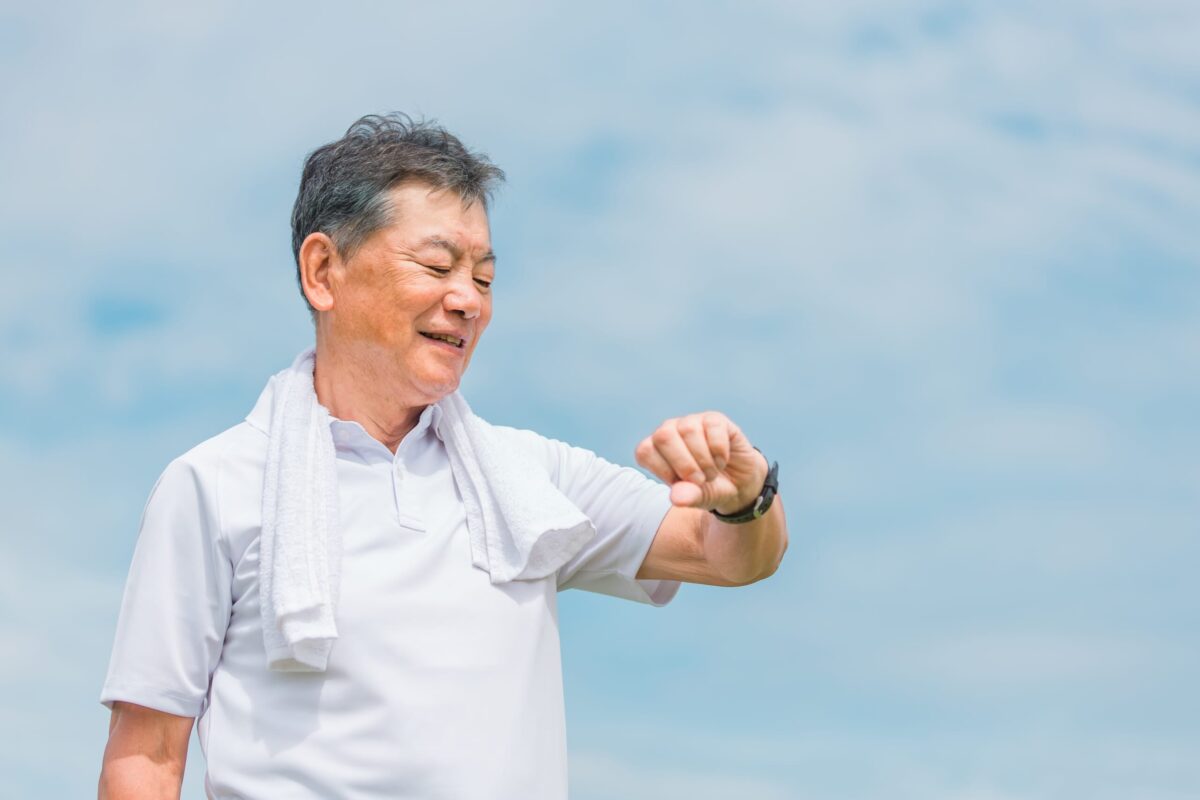
Even though your doctor has told you to exercise, you might be feeling anxious or reluctant, wondering, "What if exercising makes my blood pressure rise even more?"
The 50s are a time when the flexibility of blood vessels begins to decline, and exercising through sheer willpower, as you might have done in your 20s, can be counterproductive. However, if you don't move, your blood vessels will only continue to age.
This article introduces "quiet training" that stimulates muscles without raising blood pressure, leading to improved vascular health.
table of contents
Strength training exercises that raise blood pressure and should be avoided
Well-intentioned exercise can sometimes be fatal. Here are three points to be aware of:
- 1. Hold your breath and strain (Valsalva maneuver):
When you lift heavy objects and hold your breath, the intrathoracic pressure increases rapidly, causing a sharp rise in blood pressure. Strength training that makes your face turn bright red is dangerous.
- 2. The action of lowering the head:
Avoid sudden abdominal exercises and postures where your head is lower than your heart, as these can increase intracranial pressure and blood pressure.
- 3. Temperature difference in the environment (heat shock):
Running early in the winter or suddenly exercising in an air-conditioned gym can cause blood vessels to constrict, leading to accidents.
Isometric exercises to lower blood pressure
A recommended method is isometric exercise. Isometric exercises involve maintaining tension without moving the joints or changing the length of the muscles (e.g., the prayer pose or sitting in the air).
The mechanism by which blood pressure decreases even without movement lies in the massage of blood vessels by muscles. When muscles contract, they temporarily compress the blood vessels, and the moment they release, blood flows rapidly, causing endothelial cells to secrete NO (nitric oxide), which dilates the blood vessels. The American Heart Association (AHA) guidelines also recommend handgrip exercises, in addition to aerobic exercise and dynamic resistance such as weightlifting, as effective exercises for lowering blood pressure in adults, regardless of whether they have hypertension or not, and the effectiveness of these exercises has been confirmed in systematic reviews and meta-analyses.
Reference: Isometric exercise training for blood pressure management: a systematic review and meta-analysis
Blood pressure care you can do at home | Practical guide
Here are two specific methods for managing your blood pressure that you can start immediately at home. These are easy, medically-backed methods that you can even do while watching TV.
Method 1: The Magic Towel Grip (Hand Grip Method)
The American Heart Association (AHA) lists the "handgrip method" as a complementary therapy for improving blood pressure, and this method, which uses a face towel, is an easier version of that method. It was devised by a Canadian doctor, and all you need is one face towel.
Roll up a towel into a cylinder and grip it with one hand. The amount of force should be about 30% of your maximum muscle strength (not enough to make your fingernails turn white). Hold this grip for 2 minutes, then rest for 1 minute. After that, do the same with the other hand. Repeat this twice on each side, for a total of 4 sets.
This simple towel-gripping technique is gaining worldwide attention as an aid in the treatment of high blood pressure. Try doing it about three times a week.
Reference: Nikkei Shimbun | Holding a towel can lower blood pressure: 10 minutes a day, 3 times a week
Method 2. Wall squats (air squats using a wall)
When using your lower body muscles, use a wall to prevent falling. Stand with your back against the wall and your feet shoulder-width apart. Slowly lower your hips until your knees are slightly bent, then stop and hold that position. Breathing is crucial. Never hold your breath; breathe as you go, perhaps by counting out loud. Start with just 10 seconds, and there's no need to force yourself to bend all the way to 90 degrees. The important thing is to continue at a comfortable angle.
The classic lower body strengthening exercise: slow squats
Once you've become comfortable with isometric exercises, try some isotonic exercises. However, avoid using momentum. Slow squats are a good option.
The key is a 4-second rhythm. Slowly lower your hips while counting "1, 2, 3, 4," and return to the starting position over the same amount of time. This slow movement allows you to effectively engage your muscles even with light resistance and prevents drastic fluctuations in blood pressure. Also, by not fully extending your knees (non-locking) when standing up, you reduce stress on your joints while maintaining muscle engagement. Strengthening the quadriceps, the largest muscle in the body, improves glucose metabolism and promotes overall blood circulation.
Reference: Nikkei Shimbun | Slow squats: Efficiently strengthen muscles and improve posture?
summary
When done correctly, exercise can be a side-effect-free treatment. However, you won't see immediate changes after just one day. "Consistency is key." Try doing it for at least four weeks.
If your systolic blood pressure is 180 mmHg or higher, be sure to consult your doctor before exercising. If you are unable to do squats due to knee or lower back pain, we can also support you in regaining the ability to exercise through regenerative medicine approaches that include joint treatment.