

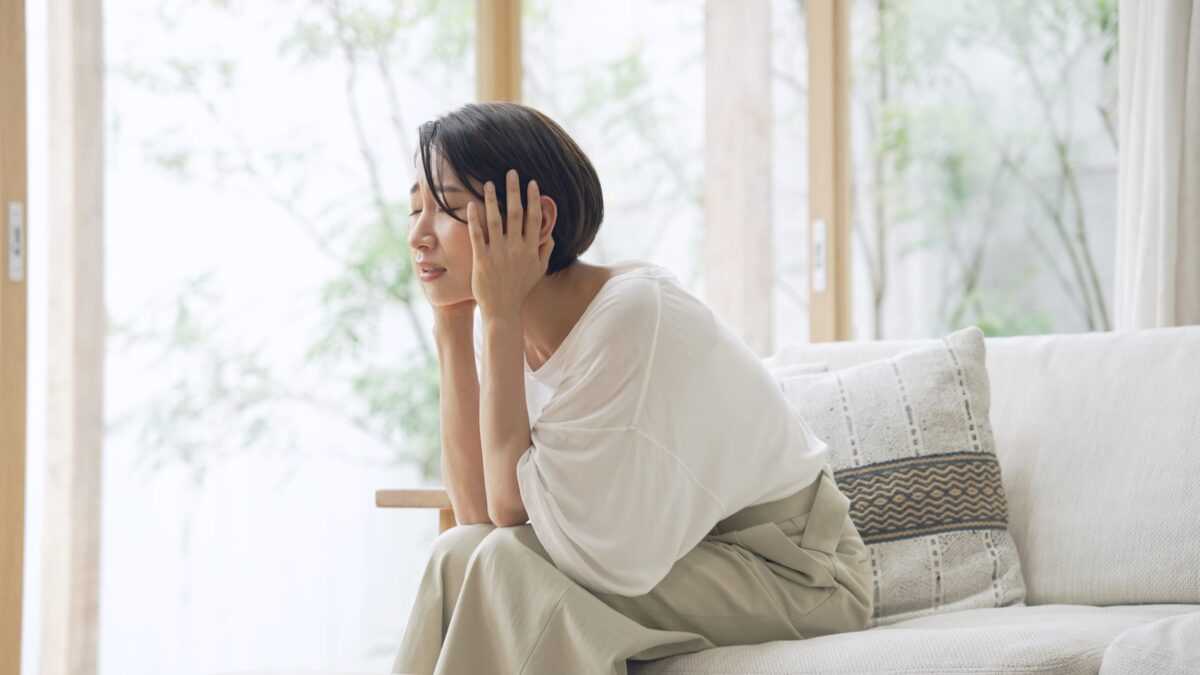
"I haven't been feeling well lately." "Is it because I'm getting older that I'm getting irritated by trivial things?"
Many women, especially those over 40, may be feeling confused by the changes in their mind and body that they haven't experienced before. These unexplained ailments might be a sign that menopause is beginning.
Menopause is a natural life stage change that all women experience. Understanding it correctly can help you navigate these changes more effectively and live more comfortably.
table of contents
What is menopause? At what age does it begin?
Menopause is the gradual cessation of ovarian activity and the permanent cessation of menstruation. A diagnosis of menopause is made retroactively to one year prior when it is confirmed that menstruation has not stopped for one year since the last menstruation. Perimenopause refers to the period before and after menopause, specifically the approximately 10-year period consisting of the five years before and the five years after menopause.
The average age of menopause for Japanese women is around 50, so generally, the period from around 45 to 55 years old corresponds to perimenopause.
During menopause, the secretion of estrogen, a female hormone that has protected women's health for many years, decreases rapidly as ovarian function declines, causing a significant disruption to the hormonal balance. These changes in hormonal balance can cause various physical and mental ailments.
Sources: Japan Society of Obstetrics and Gynecology | Menopausal Disorders; Japan Society for Women's Health | For Those Considering Hormone Replacement Therapy "To Correctly Understand Hormone Replacement Therapy - From the Hormone Replacement Therapy Guidelines"
Source: "Ministry of Health, Labour and Welfare Project," supervised by the Department of Obstetrics and Gynecology, University of Tokyo and the National Center for Child Health and Development, "Women's Health Promotion Office Healthcare Lab" | What is Menopause?
Early symptoms of menopause and checklist
One of the first symptoms of menopause is irregular menstrual cycles. Check the typical symptoms, and if you have any symptoms that concern you, consult a doctor.
Early symptoms of menopause
The first symptom that often appears is irregularity in the menstrual cycle. Around the age of 40, the cycle tends to become irregular or shorter, and becomes even more irregular around the age of 50.
The organs affected by the female hormone estrogen are not limited to the uterus and ovaries; they exist throughout the body, including the brain, blood vessels, bones, and skin. Therefore, during menopause, when estrogen levels decrease, a variety of physical and mental symptoms appear.
However, even if symptoms resemble those of menopause, they may be caused by other illnesses such as hyperthyroidism, arrhythmia, or bipolar disorder. As stated in the literature, "It is important to check whether there is a serious illness lurking behind the diverse symptoms of menopause. We may recommend consulting not only an obstetrician/gynecologist, but also an internist, orthopedic surgeon, otolaryngologist, psychosomatic medicine specialist, or psychiatrist." Therefore, depending on the situation, we may recommend consulting not only an obstetrician/gynecologist, but also an internist, orthopedic surgeon, otolaryngologist, psychosomatic medicine specialist, or psychiatrist.
Menopause checklist
Take a moment to reflect on your recent physical condition and check if any of these apply to you. These symptoms are typical signs of menopause.
- My face is flushed.
- I sweat easily.
- My face and hands and feet get cold easily.
- Shortness of breath, palpitations
- Difficulty falling asleep, or light sleep
- I get angry easily and get irritated quickly.
- I sometimes worry or feel depressed.
- Headaches, dizziness, and nausea are common.
- Easily tired
- I have stiff shoulders, lower back pain, and pain in my hands and feet.
If you have any concerning symptoms, please see a gynecologist.
Source: J-stage | Menopausal Disorders Source: "Ministry of Health, Labour and Welfare Project" Supervised by the Department of Obstetrics and Gynecology, University of Tokyo and the National Center for Child Health and Development "Women's Health Promotion Office Healthcare Lab" | Menopausal Disorder Check
Treatment for menopausal symptoms
If menopausal symptoms are so severe that they interfere with daily life, it is considered a condition that requires treatment, known as menopausal disorder. Medical institutions offer various options to alleviate symptoms, including medication and counseling.
Drug therapy
The main treatment is medication. Vaginal suppositories containing hormones are effective for vaginal dryness and painful intercourse, and depending on the symptoms, a combination of hormones and herbal medicines, as well as autonomic nervous system regulators, sleeping pills, and psychotropic drugs may also be used.
Hormone replacement therapy (HRT)
Hormone replacement therapy (HRT), which compensates for the decrease in estrogen that is the root cause of menopausal symptoms, is an effective treatment. Typically, HRT involves administering a combination of two hormones, estrogen and progesterone (estrogen-progesterone combination therapy).
HRT is a treatment method that is particularly effective for hot flashes, flushing, and sweating, which are typical symptoms of menopause. Furthermore, it can help prevent osteoporosis, which weakens bones, and heart and vascular diseases, offering many benefits in protecting your future health.
If you have had a hysterectomy, progesterone is not necessary. There are various forms of medication (oral, transdermal, topical) and methods of administration; you should consult with your doctor to choose the best option based on your lifestyle and symptoms.
Chinese herbal medicine
In Oriental medicine, the mind and body are considered as one, and the goal is to restore overall balance. Herbal medicines are prescribed according to each individual's constitution, known as their "sho," and are characterized by their gentle effects on both the mind and body.
The three major prescriptions commonly used for menopausal symptoms are "Toki-shakuyaku-san," "Kami-shoyo-san," and "Keishi-bukuryo-gan."
The most common is Toki-shakuyaku-san, prescribed for people with a weak constitution who are prone to feeling cold and easily fatigued. For even weaker individuals who also experience mental symptoms such as anxiety and insomnia, Kami-shoyo-san is prescribed. For those with relatively good physical strength who experience hot flashes or resistance and tenderness in the lower abdomen, Keishi-bukuryo-gan is used. Kampo medicine is said to have beneficial effects on both the mind and body.
psychotropic drugs
Psychotropic drugs (such as antidepressants and anti-anxiety medications) are used when mental symptoms such as depression, anxiety, insomnia, and irritability are particularly distressing. Antidepressants, especially SSRIs (selective serotonin reuptake inhibitors), alleviate symptoms by acting on serotonin, which is involved in mood stability.
Furthermore, since serotonin is also involved in regulating body temperature, it is believed to be effective in improving hot flashes. Side effects that may occur in 10-20% of people include nausea and constipation.
Counseling and psychotherapy
Menopausal symptoms are greatly influenced by psychological and social factors such as inherent personality traits and stress at home and work. Therefore, medication alone may not be sufficient for improvement, and counseling can be effective.
Often, having a professional listen to what you have to say and acknowledge your feelings in a positive way can lighten your burden.
Furthermore, cognitive behavioral therapy, which helps you become aware of your ways of perceiving things and your behavioral habits, and change them into ways of thinking that make you feel more at ease, is said to be effective not only for mental symptoms but also for physical symptoms such as insomnia, hot flashes, and night sweats.
Sources: J-stage | Menopausal Disorders Source: Japan Society of Obstetrics and Gynecology | Menopausal Disorders Source: "Ministry of Health, Labour and Welfare Project" Department of Obstetrics and Gynecology, University of Tokyo and National Center for Child Health and Development, supervised by "Women's Health Promotion Office Healthcare Lab" | What are Menopausal Disorders?
summary
Menopause is a natural life stage that all women go through. You may feel confused by the various changes in your mind and body, but this is by no means an unusual problem.
By correctly understanding the mechanisms and skillfully utilizing medical help such as hormone replacement therapy and herbal medicine when needed, you can navigate menopause more comfortably and positively. If you have any suspicions, don't hesitate to consult a gynecologist.
📷 HELENE Clinic's Instagram is here
Supervised by: Dr. Nobuhito Ueda (Surgeon)